NFPA 704 Hazard Diamonds
The colorful diamond on tanks, doors and buildings is the NFPA 704 hazard rating system. It tells firefighters and other emergency responders, at a glance, how dangerous the materials inside are in a fire or spill.
- General Industry
- Warehouses
- Emergency responders
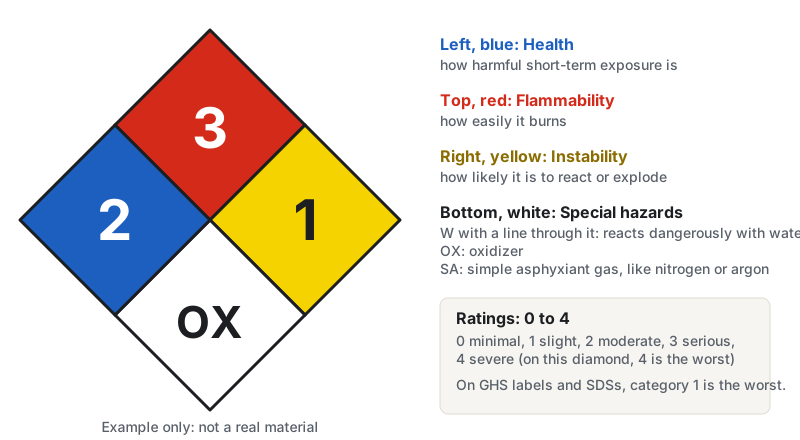
Reading the diamond
| Section | Color | Hazard |
|---|---|---|
| Left | Blue | Health: how harmful short-term exposure is |
| Top | Red | Flammability: how easily it burns |
| Right | Yellow | Instability: how likely it is to react or explode |
| Bottom | White | Special hazards, using symbols |
The numbers
Each colored section is rated 0 to 4:
- 0: minimal hazard
- 1: slight
- 2: moderate
- 3: serious
- 4: severe; for example, health 4 can be deadly with short exposure, flammability 4 burns readily at normal temperatures
White section symbols
- W with a line through it: reacts dangerously with water; don’t use water on it
- OX: oxidizer; makes fires burn hotter
- SA: simple asphyxiant gas, like nitrogen or argon. See Inert Gas Asphyxiation
Don’t mix it up with GHS labels. On the GHS labels and Safety Data Sheets used under OSHA’s Hazard Communication standard, category 1 is the most severe. On the NFPA diamond, 4 is the most severe. Read which system you’re looking at. See Hazard Communication.
What it’s for
- Fire codes and local fire departments often require NFPA 704 signs on buildings, rooms and tanks that store hazardous materials.
- It’s meant for emergencies, like fires and spills. For everyday handling, use the container label and SDS.
- Ratings describe the material’s hazards in an emergency, not how much is stored.
Standards & references
Last updated: