Air Brakes
Most heavy trucks and buses stop with air brakes. They’re powerful and reliable when maintained, but they work differently from car brakes: there’s a short delay before they apply, they can be knocked out of adjustment, and they can fade on long downgrades. Brake problems are among the most common out-of-service violations.
- Truck drivers
- Bus drivers
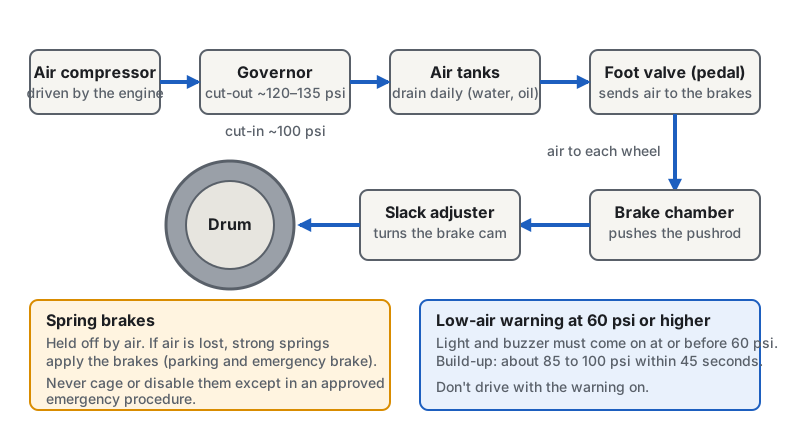
How the system works
- An engine-driven compressor pumps air into storage tanks.
- The governor stops the compressor at the cut-out pressure (often around 120 to 135 psi) and restarts it at the cut-in pressure (often around 100 psi).
- Pressing the brake pedal sends air to brake chambers at each wheel, which push rods that turn slack adjusters and apply the brakes.
- Spring brakes are held off by air pressure. If air is lost, strong springs apply them. They serve as the parking brake and emergency brake.
- A low-air warning (light and buzzer) must come on at or before 60 psi.
- Most systems are dual (two separate circuits), so one leak doesn’t take out all the brakes.
The air brake check
Follow your CDL manual and company procedure. A typical check includes:
- Build-up rate: with the engine at operating speed, pressure should build from about 85 to 100 psi within 45 seconds on a dual system.
- Governor cut-out and cut-in: confirm the compressor stops and restarts at the right pressures.
- Leak rate: with the engine off and the brakes released, then with the brakes fully applied, the pressure loss in one minute must stay within the limits in your manual (lower for single vehicles than combinations).
- Low-air warning: fan the brakes to lower pressure; the warning must come on at or before 60 psi.
- Spring brakes: keep fanning; the parking brake valve should pop out (spring brakes apply) within the range set by the manufacturer.
- Parking and service brake tests: gently try to pull against the parking brake, then make a slow stop with the service brake to make sure the truck stops straight.
Brake adjustment
As linings wear, the pushrod travels farther before the brake applies. Automatic slack adjusters compensate, but they can fail. Too much pushrod travel means weak brakes. Inspectors measure it, and drivers should check it during the pre-trip. An automatic slack adjuster that keeps going out of adjustment means there’s a mechanical problem; get it repaired, don’t just keep adjusting it.
Draining the tanks
Compressed air contains water and oil that collect in the tanks and can freeze in winter. Drain manual tanks daily (unless they have automatic drains), and watch for oil, which can mean a compressor problem.
Braking on the road
- Leave more following distance. Air brakes have a brief lag, and a heavy truck needs far more distance to stop than a car.
- On long downgrades, use a lower gear and the engine brake so the service brakes don’t overheat and fade. See Mountain Grades & Brake Fade.
- In an emergency without ABS, use controlled or stab braking to avoid locking the wheels. With ABS, brake firmly and steer.
- If the low-air warning comes on, stop safely as soon as possible while you still have control.
- Don’t use the trailer hand valve to park; it isn’t a parking brake.
- Don’t drive with the low-air warning on.
- Don’t cage or disable spring brakes except in an approved emergency procedure.
Standards & references
- 49 CFR 393 Subpart C: Brakes
- Your state’s CDL manual: Air Brakes section
- CVSA: Brake Safety programs
Last updated: