Defensive Driving
Defensive driving means driving so you can avoid a crash even when someone else makes a mistake. You can’t control other drivers, but you can control your speed, your space and where you look, which gives you time to react.
- All drivers
- Work vehicles
Five core habits
- Look far ahead. Aim your eyes 12 to 15 seconds down the road, not at the bumper in front of you. You’ll see brake lights, merging cars and hazards early.
- See the big picture. Know what’s beside and behind you, not just ahead.
- Keep your eyes moving. Scan ahead, check mirrors every few seconds, and look left-right-left at intersections. A fixed stare misses things.
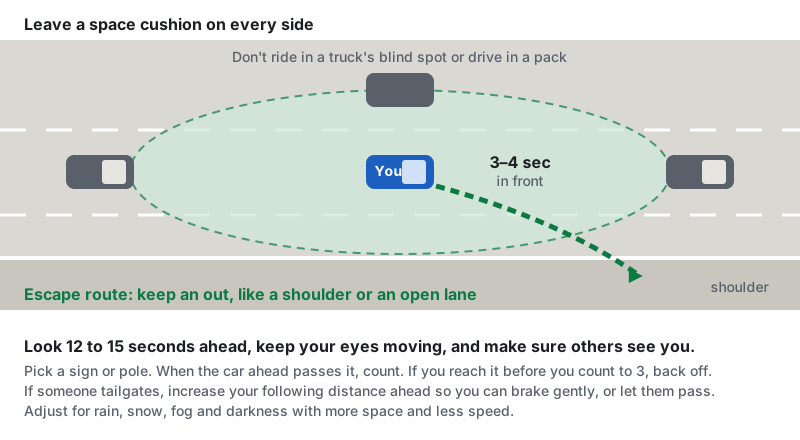
- Leave yourself an out. Keep space around your car so you have somewhere to go: an open lane, a shoulder. Avoid driving in packs.
- Make sure they see you. Use signals, headlights, a light tap of the horn when needed, and eye contact at intersections.
Space cushions
- In front: at least 3 to 4 seconds of following distance. Pick a sign or pole; when the car ahead passes it, count. If you reach it before you count to three, back off.
- Behind: if someone tailgates, increase your following distance ahead so you can brake gently, or let them pass.
- Sides: don’t ride in other drivers’ blind spots, especially trucks. See Sharing the Road with Trucks.
Expect mistakes
- A car stopped at a side street may pull out.
- A car with a turn signal on may not turn, and one without may.
- A driver at a green light may run a red the other way. Look before entering an intersection, even with a green.
- Kids, bikes and pets can dart out between parked cars.
Managing yourself
- Leave early so you aren’t rushing.
- Don’t drive angry. Let aggressive drivers go. See Road Rage.
- Don’t drive tired, impaired or distracted.
- Adjust for conditions: rain, snow, fog and darkness all call for more space and less speed.
Taking a course
Defensive driving courses are offered online and in person. Some states and insurance companies give discounts or point reductions for completing one, and many employers require them for workers who drive.
Standards & references
Last updated: