Highway Driving & Merging
Highways are designed to be among the safest roads, but high speeds mean small mistakes have big consequences. Most highway crashes come from merging, changing lanes, following too closely and sudden slowdowns.
- All drivers
- New drivers
Getting on
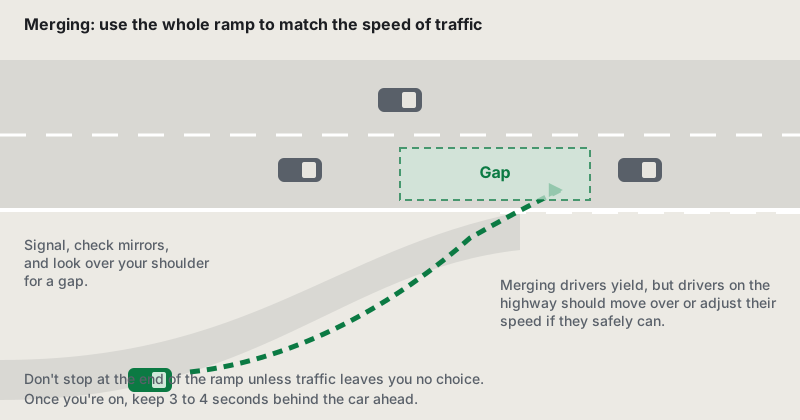
- Use the full on-ramp to match the speed of traffic. Merging slowly is dangerous.
- Signal, check mirrors and look over your shoulder for a gap.
- Merging drivers must yield, but drivers on the highway should move over or adjust speed if they safely can.
- Don’t stop at the end of the ramp unless traffic leaves you no choice.
Lane closures and zipper merging
When a lane is ending in heavy traffic, highway agencies recommend the zipper merge: use both lanes up to the merge point, then take turns. It reduces backups and sudden lane changes. In light traffic, merge early.
Lane discipline
- Keep right except to pass. Many states require it.
- Pass on the left, and return to the right lane when you can see the passed vehicle in your rearview mirror.
- Change lanes one at a time, signaling every time.
- Don’t linger beside other vehicles, especially trucks. See Sharing the Road with Trucks.
Exits
- Plan exits early and move to the correct lane well ahead.
- Slow down on the exit ramp, not on the highway, when possible.
- If you miss your exit, go on to the next one. Never back up or stop on the highway.
Slowdowns and stopped traffic
- Keep at least 3 to 4 seconds of following distance so you can handle sudden stops.
- Watch far ahead for brake lights and tap your brakes early to warn drivers behind you.
- Turn on hazards briefly when you come upon stopped traffic at speed.
- Move over or slow down for vehicles on the shoulder. See Move Over Laws.
Highway hypnosis
Long, monotonous drives can put you in a trance-like state, and drowsiness creeps in. Take breaks every 2 hours, share driving, and stop when you notice drifting. See Drowsy Driving.
If you break down
Get as far off the road as possible. See Breaking Down on the Highway.
Standards & references
- Your state’s driver handbook
- NHTSA: Road safety
Last updated: