Jump-Starting a Car
A dead battery is one of the most common breakdowns. Jump-starting is simple, but car batteries give off hydrogen gas that can explode with a spark, and connecting the cables wrong can damage electronics. Follow the right order every time.
- All drivers
Before you start
- Check the owner’s manual; some cars have special jump points or rules
- Both cars off, in park, parking brakes on, not touching
- Wear safety glasses if you have them; keep sparks and flames away
- Look at the dead battery: don’t jump it if it’s cracked, leaking, swollen or frozen
Connecting the cables
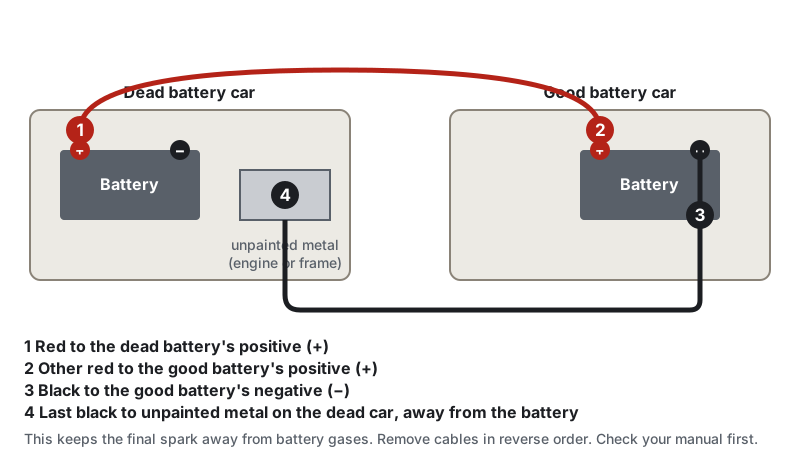
- Red clamp to the positive (+) terminal of the dead battery.
- Other red clamp to the positive (+) terminal of the good battery.
- Black clamp to the negative (−) terminal of the good battery.
- Last black clamp to an unpainted metal part of the dead car’s engine or frame, away from the battery. This keeps the final spark away from battery gases.
Starting
- Start the good car and let it run a few minutes.
- Try starting the dead car. If it doesn’t start, wait a few minutes and try again; don’t crank for long stretches.
- Once it starts, remove the cables in reverse order, without letting clamps touch each other.
- Drive the car for a while, or have the battery and charging system tested.
Battery acid burns. If acid gets on your skin or in your eyes, flush with water for at least 15 minutes and get medical care. See Acids & Caustics.
Portable jump packs
Battery jump packs let you start a car without a second vehicle. Follow the pack’s instructions, keep it charged, and don’t leave it in extreme heat. They contain lithium-ion batteries. See Battery Safety.
Hybrids and EVs
Many hybrids and EVs have a small 12-volt battery that can be jumped at specific terminals, but the high-voltage system must never be touched. Some can’t be used to jump other cars. Check the manual. See EV Hazards.
Standards & references
- NHTSA: Road safety
- See also: Breakdowns · Basic Car Maintenance
Last updated: