When Equipment Contacts a Power Line
When a boom, bed or bucket touches an energized line, the whole machine can become electrified, along with the ground around it. What the operator and the crew do in the next few seconds decides whether anyone dies. Know this before it happens.
- Equipment operators
- Crane operators
- Truck drivers
- Ground crews
If you’re in the cab
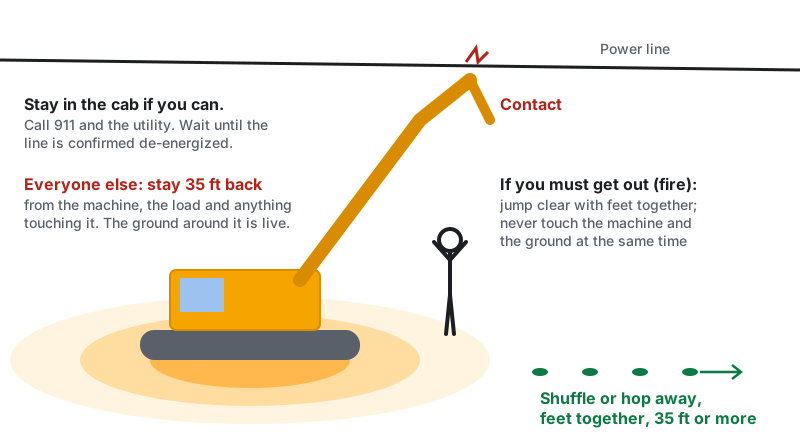
- Stay in the cab. Inside, you’re at the same voltage as the machine and are usually safe.
- Try to break contact by moving the boom or machine away from the line, if you can do it safely.
- Warn everyone to stay at least 35 feet away from the machine, the load and anything touching it.
- Call 911 and the utility. Wait until the utility confirms the line is de-energized before getting out.
If you must get out (fire or other immediate danger)
- Remove loose clothing that could catch.
- Jump clear from the cab with your feet together, so no part of you touches the machine and the ground at the same time.
- Land with your feet together and keep your balance.
- Shuffle or hop away with your feet together, keeping both feet on the ground or both in the air, until you’re at least 35 feet away.
- Never go back to the machine until the utility says it’s safe.
Ground workers are most at risk. Anyone touching the machine, a tag line, the load or a hand-guided hose while standing on the ground can be electrocuted. Ground voltage spreads out from the machine, so step potential can kill people nearby. Stay back, and keep others back. See Downed Power Lines.
Don’t try to help by touching
If a coworker is being shocked, don’t touch them, the machine or anything connected. Call 911, keep people away and wait for the power to be shut off. Then give CPR or first aid. See CPR & AED.
Preventing contact
- Plan the job: find the lines, ask the utility for voltage, and ask whether lines can be de-energized or covered.
- Keep equipment at least the minimum clearance. For cranes and similar equipment, OSHA starts at 10 feet for lines up to 50 kV, more for higher voltages, with extra precautions when equipment could get within 20 feet. See Overhead Power Lines.
- Use a dedicated spotter whose only job is watching the clearance.
- Mark limits with elevated warning lines, range limiters or proximity alarms.
- Lower dump beds before moving, and never travel with booms raised under lines.
- Use non-conductive tag lines.
Crew briefing checklist
- Where are the overhead lines, and what voltage?
- What is our minimum clearance, and who is the spotter?
- What do we do if we make contact?
- Who calls 911 and the utility, and what’s the site address?
- Everyone knows to stay off the machine and 35 feet back after a contact
Standards & references
- 29 CFR 1926.1408: Power line safety for cranes and derricks
- 29 CFR 1926.1410: Power line safety, all voltages
- See also: Crane Safety Basics · Dump Trucks
Last updated: