Access, Egress, Spoils & Water
Even with a protective system, workers need a fast way out, the edges must be kept clear, and water and bad air must be controlled.
- Construction
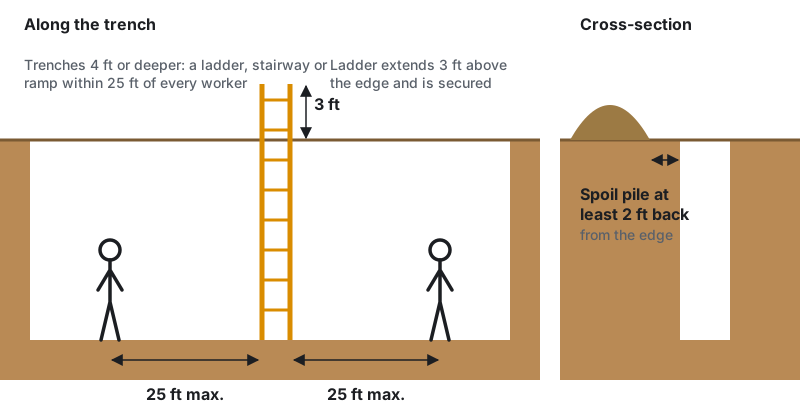
Getting in and out
- Trenches 4 feet or deeper need a ladder, stairway or ramp so no worker has to travel more than 25 feet sideways to reach it.
- Ladders extend at least 3 feet above the trench edge and are secured.
- Never climb out using shoring, the trench box frame or the trench walls.
- Place ladders inside the trench box or other protected area, not in the unprotected part of the trench.
- Structural ramps used by workers must be designed by a competent person; ramps used by equipment must be designed by a competent person qualified in structural design. Earth ramps need good footing and a gentle slope.
- Ladder or ramp within 25 feet of every worker
- Ladder secured and extending 3 feet above the edge
- Ladder in good condition and not blocked by pipe, spoil or equipment
- More ladders added as the trench gets longer
Spoils and edges
- Keep spoil piles, materials and equipment at least 2 feet back from the edge (or use a retaining device).
- Keep heavy equipment back from the edge, or account for its weight in the protective system.
- Barricade or cover trenches and holes left open; use walkways with guardrails when crossing excavations 6 feet or deeper.
Loose rock, falling loads and equipment at the edge
- Protect workers from loose rock or soil falling from the face by scaling it off, or installing barricades or a trench box that extends above the edge.
- No one may stand or work under loads handled by excavators or cranes, or stand where they could be hit by spilling material.
- Truck drivers must stay away from vehicles being loaded unless they’re in a protected cab.
- When equipment approaches the edge and the operator can’t see it, use a warning system: barricades, stop logs, or hand or mechanical signals.
Why spoil placement matters
A spoil pile right at the edge adds weight to the trench wall, can roll back in on workers, and blocks escape. Material that slides off the pile into the trench also buries pipe layers. Keep it back, keep it low, and don’t pile it where it blocks ladders or traffic.
Water
- Don’t work in trenches where water is accumulating unless precautions (pumping, special supports, harness and lifeline) are in place and monitored by the competent person.
- Divert surface water away from the excavation.
Hazardous atmospheres
- Where a hazardous atmosphere could exist (near landfills, sewers, fuel storage, or with gas-powered equipment) in excavations deeper than 4 feet, test the air before entry and as often as needed.
- Use ventilation and respiratory protection if needed. Keep rescue equipment ready.
- Precautions are required when oxygen is below 19.5% or flammable gas is above 20% of its lower flammable limit.
- Don’t run gas-powered pumps, compactors or saws in the trench unless the air is monitored. Carbon monoxide builds up fast. See Carbon Monoxide.
Standards & references
- 29 CFR 1926.651(c), (g), (h), (j): Access and egress, atmospheres, water, loose rock and soil
Last updated: