Fixed Ladders & Ladder Safety Systems
Fixed ladders lead to roofs, tanks, silos, towers, pits and mezzanines. Long climbs are tiring, your hands are your only grip, and a fall from a fixed ladder is usually from a great height. The rules for protecting climbers have changed, and cages are on their way out.
- General Industry
- Construction
The 24-foot rule
In general industry, a fixed ladder that extends more than 24 feet above a lower level needs fall protection. The kind of protection depends on when the ladder was installed:
| Ladder | What’s required |
|---|---|
| Installed before November 19, 2018 | A cage, well, ladder safety system or personal fall arrest system |
| Installed on or after November 19, 2018 | A ladder safety system or personal fall arrest system (a cage alone is not enough) |
| Cage, well or ladder section replaced | The replaced section must get a ladder safety system or personal fall arrest system |
| All fixed ladders, by November 18, 2036 | A ladder safety system or personal fall arrest system |
Construction rules also require cages, wells, ladder safety systems or personal fall arrest on fixed ladders with a climb of 24 feet or more. Your employer or site safety plan may require more.
Why cages are being phased out
A cage feels safe, but it doesn’t stop a fall. A worker who lets go slides down inside the cage, hitting the hoops, or falls backward through it. Studies and incident reports led OSHA to require systems that actually catch the climber.
How a ladder safety system works
A ladder safety system has a carrier (a rigid rail or a cable) running the length of the ladder and a sleeve (also called a grab or trolley) that slides along it. The sleeve connects to the front (chest) D-ring of your full-body harness. It follows you as you climb and locks onto the carrier if you fall.
- Use only the sleeve made for that brand and model of carrier. Sleeves are not interchangeable.
- Keep the connection short. OSHA limits the distance between the carrier and your harness attachment to 9 inches.
- Install the sleeve in the correct direction. Most have an arrow that must point up.
- On very long climbs, rest platforms are required at least every 150 feet on ladders with a ladder safety system.
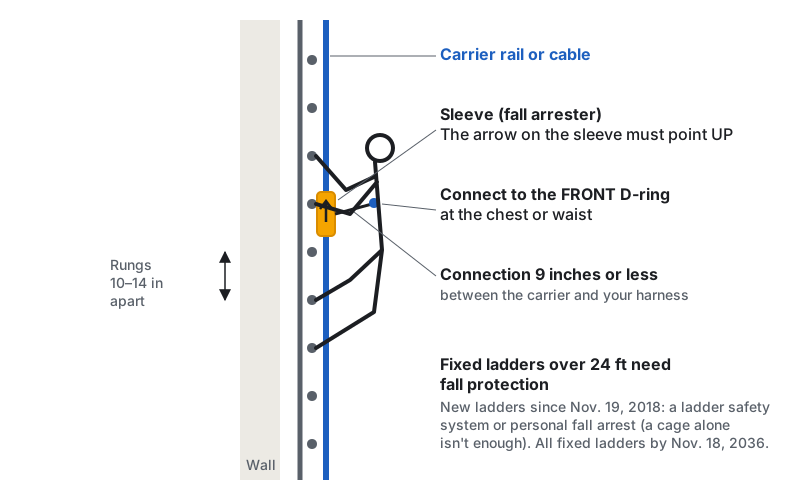
Fixed ladder basics
- Rungs: evenly spaced 10 to 14 inches apart, at least 16 inches wide on fixed ladders, slip-resistant and free of grease or ice.
- Clearance: at least 7 inches behind the rungs so your feet fit.
- Top of the ladder: side rails extend 42 inches above the landing (or grab bars are provided) so you can step off safely.
- Strength: built to hold at least two 250-pound loads between attachments.
Inspect before you climb
- Rungs and rails are straight, tight and not cracked, bent or badly corroded
- Mounting brackets and bolts are tight, with no loose or missing fasteners
- The carrier rail or cable is undamaged, tensioned and attached at the top and bottom
- The sleeve moves freely, locks when jerked downward and has a legible label
- Harness and front D-ring are inspected and fit snugly
- The landing at the top has a gate, guardrail or offset so you can’t step into an opening
- No ice, mud, bird droppings or oil on rungs
Climbing safely
- Connect to the ladder safety system before leaving the ground, and stay connected until you’re on the landing behind a guardrail.
- Face the ladder and keep three points of contact. Climb at a steady pace and don’t race.
- Carry tools in a bag on your belt or raise them with a hoist line. Never climb with your hands full.
- Rest on platforms on long climbs. Fatigue causes slips.
- Stay off the ladder in high wind, lightning or icing conditions.
- Don’t hook a regular lanyard to the rungs and “leapfrog” up unless your company uses a 100% tie-off method designed for that ladder.
- Don’t clip the sleeve to a side or back D-ring.
- Don’t use a ladder that is tagged out or missing its safety system.
Rescue matters: A worker caught by a ladder safety system can be stuck on the ladder, possibly hurt. Your employer needs a plan to reach and lower them quickly. See Fall Rescue & Suspension Trauma.
Standards & references
- 29 CFR 1910.23(d): Fixed ladders
- 29 CFR 1910.28(b)(9): Fall protection on fixed ladders
- 29 CFR 1910.29(i): Ladder safety systems
- 29 CFR 1926.1053(a)(19): Fixed ladders (construction)
- ANSI A14.3: Fixed ladders; ANSI/ASSP Z359.16: Climbing ladder fall arrest systems
Last updated: