Stairways on Construction Sites
Unfinished stairs, missing handrails, empty metal pans and cluttered steps cause many slips and falls on construction sites. Stairs are something everyone uses dozens of times a day, often while carrying something. A stairway under construction needs the same attention as any other fall hazard.
- Construction
When stairs or ladders are required
A stairway or ladder must be provided at every point where there’s a break in elevation of 19 inches or more and no ramp, runway, embankment or personnel hoist. Climbing up on buckets, block or equipment doesn’t count.
If there’s only one way up or down, keep it clear. If work or equipment blocks it, a second way between levels must be provided. Where ladders are the only way in or out for 25 or more workers, a double-cleated ladder or two separate ladders are required.
Handrails and stairrails
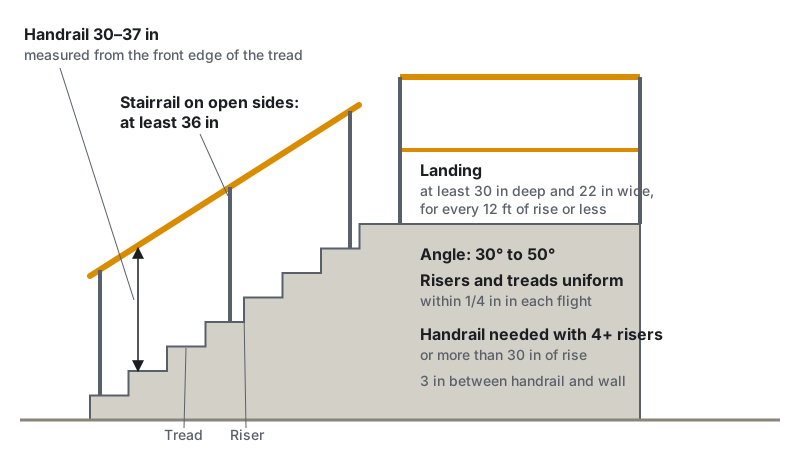
- Stairways with four or more risers or rising more than 30 inches (whichever is less) need at least one handrail.
- Every unprotected side or edge needs a stairrail system (a guardrail along the stairs).
- Handrails must be 30 to 37 inches high, measured from the front edge of the tread.
- Stairrails installed today must be at least 36 inches high.
- Handrails and top rails must hold at least 200 pounds in any direction.
- Leave at least 3 inches between the handrail and the wall so you can grip it.
- Landings with unprotected sides need guardrails.
Pan stairs and skeleton stairs
- Metal pan stairs must have their pans filled with concrete, wood or other solid material to the top of each pan before anyone uses them.
- The exception: workers installing the stairs may use them, or the pans can be temporarily filled with wood or other solid material cut to fit.
- Skeleton metal stairs (frames with no treads yet) need temporary treads and landings that are full width and depth, secured in place.
- Empty pans are a serious tripping and twisting hazard. Barricade stairs that aren’t ready.
Stair layout
- Stairs must be built at an angle between 30 and 50 degrees.
- Riser heights and tread depths must be uniform within each flight, with no more than 1/4 inch difference. An uneven step trips people.
- Landings at least 30 inches deep and 22 inches wide are needed for every 12 feet of rise or less.
- A door or gate opening onto a stairway needs a platform, and the door swing can’t reduce the platform to less than 20 inches.
Using stairs safely
- Keep stairs free of debris, cords, hoses, tools and materials. Stairs aren’t storage.
- Use the handrail, and keep one hand free.
- Clean up mud, ice, snow and spills on treads right away. Fix slippery conditions before the stairs are used.
- Make sure stairways are well lit. Temporary lighting goes out often, so report dark stairs.
- Use a hoist, a second person or the elevator for heavy or bulky loads.
- Don’t carry loads that block your view of the steps.
- Don’t run or skip steps.
- Don’t use stairs that are slippery, damaged or missing handrails. Report them.
- Don’t remove a stairrail to bring material in without replacing it immediately.
Daily stairway check
- Handrail in place and solid
- Stairrails or guardrails on every open side and landing
- Pans filled or temporary treads secured
- No debris, cords or stored material
- No ice, mud, water or loose objects on treads
- Lighting working
- Incomplete stairs barricaded and marked
Standards & references
- 29 CFR 1926.1051: General requirements (stairways and ladders)
- 29 CFR 1926.1052: Stairways
- 29 CFR 1926.1060: Training for stairways and ladders
- See also: Slips & Trips
Last updated: