Hierarchy of Controls
There is more than one way to control a hazard, and some ways work much better than others. The hierarchy of controls ranks them from most effective to least effective.
- Construction
- General Industry
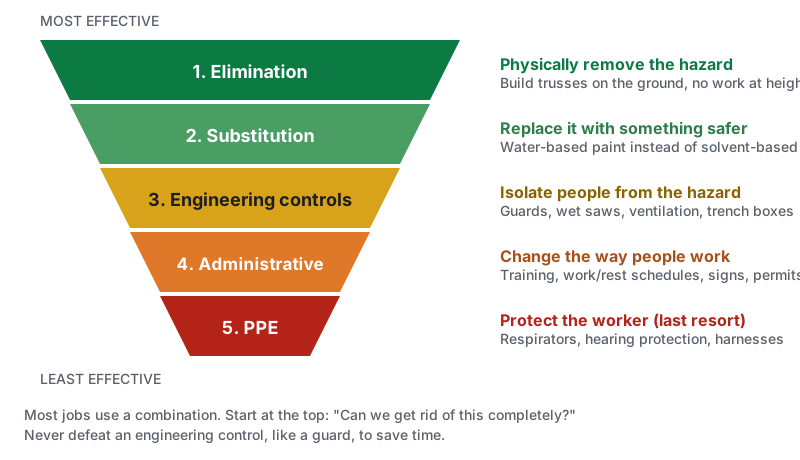
The five levels
| Level | What it means | Example |
|---|---|---|
| 1. Elimination (best) | Physically remove the hazard | Assemble a roof truss system on the ground and lift it into place, so no one works at height |
| 2. Substitution | Replace it with something less hazardous | Use a water-based paint instead of a solvent-based paint |
| 3. Engineering controls | Isolate people from the hazard | Guardrails, machine guards, saws with water feed, local exhaust ventilation, trench boxes |
| 4. Administrative controls | Change the way people work | Job rotation, work/rest schedules in heat, training, warning signs, permits |
| 5. PPE (last line of defense) | Protect the worker with equipment worn on the body | Respirators, hearing protection, harnesses, gloves |
Why PPE is last
PPE only works if it is the right type, fits, is in good condition, and is worn correctly every single time. If it fails, the hazard is still there. Controls higher up the list remove or block the hazard no matter what an individual worker does.
Note: Most real jobs use a combination. A concrete cutting task might use a wet saw (engineering), a written plan and limited time (administrative), plus a face shield and hearing protection (PPE).
Using it on the job
- When you spot a hazard, start at the top: “Can we get rid of this completely?”
- Suggest better controls in toolbox talks and JHAs.
- Never remove or defeat an engineering control (like a guard) to save time.
Video: the hierarchy of controls explained with jobsite examples
Standards & references
Last updated: