Wheel Loaders
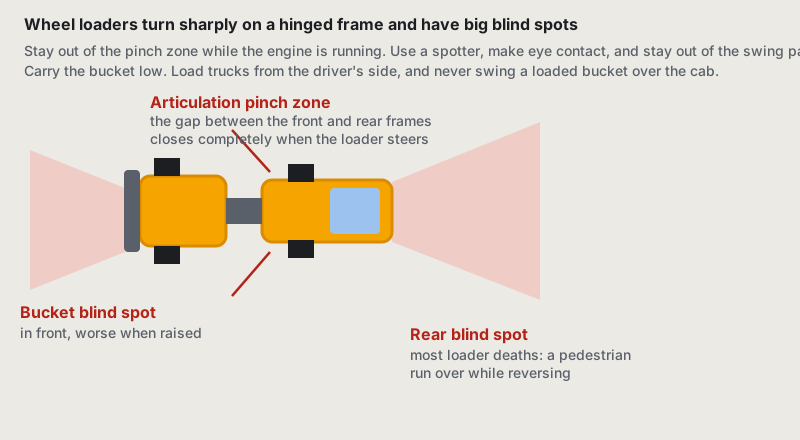
Wheel loaders load trucks, move stockpiles, clear snow and carry material around yards and jobsites. They move fast, turn sharply on an articulated (hinged) frame, and have big blind spots. A raised bucket makes them top-heavy and blocks the operator’s view. Most loader deaths involve a pedestrian being run over, usually while the loader is reversing.
- Construction
- Aggregates
- General Industry
Photo: wheel loader traveling with the bucket carried low
Main hazards
- Struck-by and run-over: loaders reverse constantly while loading, and the operator can’t see someone close behind.
- Articulation pinch point: when the loader steers, the gap between the front and rear frames closes completely.
- Tip-over: sharp turns with a raised or loaded bucket, slopes, soft ground and drop-offs.
- Stockpile collapse: undercutting a pile can bring the face down on the machine.
- Falls: slipping while climbing on or off the machine or while cleaning windows.
Pre-shift check
- Walk around the machine: no people, tools or debris nearby
- Tires: proper inflation, no cuts or bulges; wheel nuts tight
- No hydraulic, fuel or coolant leaks; hoses not rubbing
- Bucket, teeth, pins and quick coupler secure and locked
- Steps and handholds clean and solid
- Windows, mirrors and cameras clean
- Seatbelt, horn, lights, backup alarm and brakes working
- Articulation lock stowed (and present for maintenance)
Operating
- Wear the seatbelt. If the loader tips, the seatbelt keeps you inside the protective cab.
- Carry the bucket low, just high enough to clear obstacles, for stability and visibility.
- Slow down when turning. Articulated loaders can tip on sharp turns, especially loaded.
- Travel straight up and down slopes, with the loaded bucket uphill.
- Use cameras, mirrors and the horn; watch for pedestrians, especially when reversing.
- Load trucks from the driver’s side when possible, so the driver can see you, and never swing a loaded bucket over the cab. Drivers should stay in the cab or in a safe spot the operator can see.
- Lower the bucket flat to the ground, set the parking brake and shut down before leaving the seat.
- Install the articulation lock before servicing.
- Never stand in the pinch zone at the articulation joint when the engine is running.
- Never lift or carry people in the bucket.
- Don’t undercut stockpiles. A face can collapse onto the machine.
- Don’t use the bucket to lift loads with slings unless the loader has a rated lift point and chart.
- Don’t jump off the machine. Use three points of contact.
- Don’t travel with the bucket raised to see better. Slow down instead.
Attachments
Forks, grapples, snow pushers and brooms change how the loader handles and how much it can lift. Use only attachments approved for the machine, make sure the quick coupler pins are fully locked (look for the indicator), and follow the attachment’s load chart.
Working on foot near a loader
- Wear high-visibility clothing.
- Stay out of the loading area unless the operator knows you’re there.
- Make eye contact with the operator before approaching, and wait for a signal.
- Approach from the front or side where you can be seen, never from behind.
See Struck-By & Caught-Between Hazards and Backing & Spotters.
Video: loader blind spots and the articulation pinch zone
Standards & references
- 29 CFR 1926.602: Earthmoving equipment
- 29 CFR 1926.1001: Rollover protective structures
- MSHA: Mobile equipment rules for mines and quarries
Last updated: