Rollovers & Jackknifes
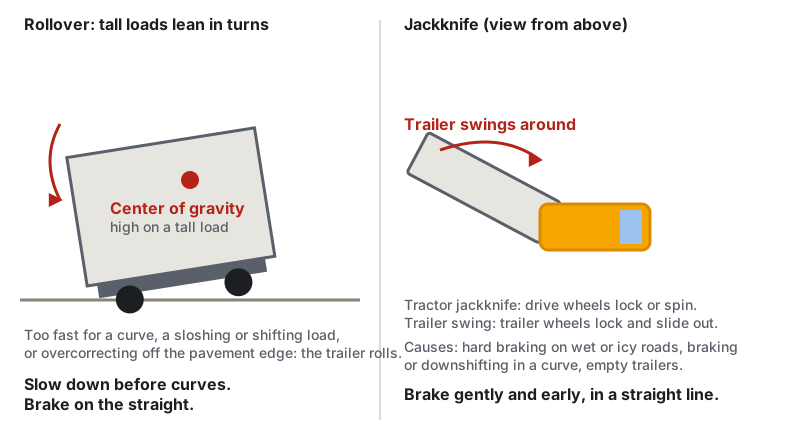
Rollovers are among the deadliest crashes for truck drivers, and many involve no other vehicle. Jackknifes, when the trailer swings around and folds against the tractor, block roads and cause pileups. Both usually start with speed that’s too high for a curve, a load, or road conditions.
- Truck drivers
Why trucks roll
- Too fast for a curve or ramp: advisory speed signs are set for cars. Loaded trucks, especially tankers and high loads, can roll at or below the posted speed.
- High center of gravity: tall or top-heavy loads lean more in turns.
- Shifting or sloshing loads: hanging meat, liquid in a partly filled tank, or unsecured freight can push the trailer over. See Tankers.
- Overcorrecting: a wheel drops off the pavement edge, the driver yanks the wheel back, and the trailer rolls.
- Off-tracking onto soft shoulders or into ditches on tight turns.
Preventing rollovers
- Slow down well before curves and ramps; brake on the straight, not in the curve.
- Keep loads low and centered, and secure them so they can’t shift.
- If your wheels drop off the road edge, stay calm, ease off the throttle, keep a firm grip, and steer back gently when you’ve slowed.
- Watch for driver fatigue; many rollovers happen when a drowsy driver drifts. See Driver Fatigue.
- Wear your seatbelt. It keeps you in the cab in a rollover.
Jackknifes
A tractor jackknife happens when the drive wheels lock or spin and the tractor slides sideways. A trailer jackknife (trailer swing) happens when the trailer wheels lock and the trailer slides out. Common causes:
- Hard braking on wet, icy or snowy roads
- Braking or downshifting in a curve
- Empty or lightly loaded trailers with little weight on the tires
- Using the engine brake on slick roads
Preventing jackknifes
- Slow down and increase following distance in bad weather. See Winter Trucking.
- Brake gently and early, in a straight line.
- Follow your company’s guidance on engine brakes on slippery roads.
- If the wheels lock, release the brakes to let them roll again, then reapply gently.
Stability control
Newer heavy trucks have electronic stability control and anti-lock brakes that can reduce engine power and apply individual brakes when a rollover or skid starts. These systems help, but they can’t overcome physics. Drive as if your truck doesn’t have them.
Standards & references
- FMCSA: Large truck safety
- Your state’s CDL manual: Preventing Rollovers and Skid Control sections
Last updated: