Tanker Trucks & Liquid Surge
Tankers carry fuel, milk, water, chemicals and food products. Liquid loads move inside the tank, pushing the truck when you stop, start and turn. Combined with a high center of gravity, that makes tankers prone to rollovers, especially on curves and ramps.
- Truck drivers
- Tank endorsement
Do you need the tank endorsement?
You need the N (tank) endorsement to drive a CMV that carries liquid or gas in a tank with a capacity of more than 119 gallons, when the tanks total 1,000 gallons or more and are attached to the vehicle. Hauling placarded hazmat in a tank also needs the H endorsement (or the combined X endorsement). See CDL Classes & Endorsements.
Liquid surge
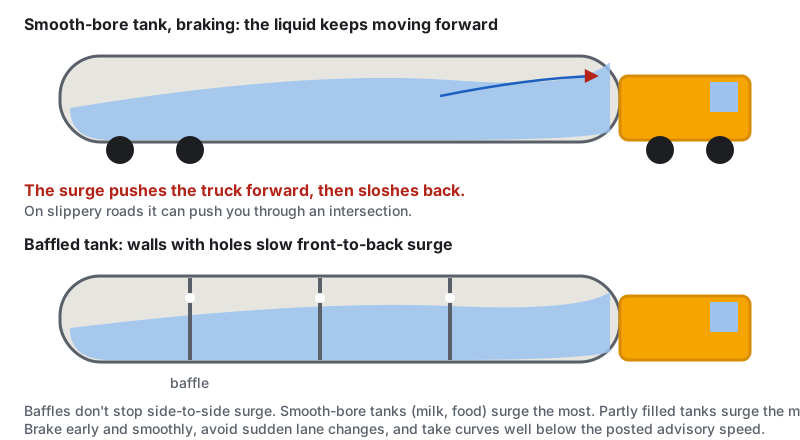
- When you brake, the liquid keeps moving forward and then sloshes back, pushing the truck. On slippery roads it can push you into an intersection or skid you.
- Partly filled tanks surge the most.
- Brake early and smoothly; release gently at the end of a stop.
- Avoid sudden lane changes, which can start a side-to-side surge.
Baffled vs. smooth-bore tanks
- Baffled tanks have internal walls with holes that slow front-to-back surge, but not side-to-side.
- Bulkheaded (compartment) tanks divide the tank into separate compartments. Load them so weight stays balanced.
- Smooth-bore tanks (common for food products like milk) have no baffles, so surge is strongest. Drive with extra care.
Rollovers
Tankers are top-heavy, and fully loaded tankers can roll at speeds below the posted advisory speed on ramps and curves. Advisory speed signs are designed for cars.
- Slow down well before curves and ramps, and take them well below the posted advisory speed.
- Don’t swerve; a sudden steering correction can roll the truck.
- Stay alert for drop-offs at the edge of the road.
Outage
Liquids expand when they warm up. Leave enough room (outage) at the top of the tank for expansion, as the product and your company require. Also know the weight per gallon, since a full tank of a dense liquid can exceed legal weight limits.
Loading and unloading
- Truck parked, brakes set and engine off as required
- Bonding and grounding connected before transferring flammable liquids. See Static Bonding & Grounding
- Fall protection or platform guardrails used on top of the tank
- Hatches opened slowly, standing upwind
- Hoses, valves and fittings inspected; spill kit ready
- Stay with the truck during transfer
Standards & references
- 49 CFR 383.5 and 383.93: Tank vehicle definition and endorsements
- Your state’s CDL manual: Tank Vehicles section
- See also: Hazmat Trucking & Placards
Last updated: