Reading a Crane Load Chart
A crane’s load chart tells you the most it can lift for one exact setup, at one radius and boom length. Most overload accidents come from using the wrong chart, forgetting deductions, or misjudging the radius, not from a crane being weak.
- Crane operators
- Lift directors
- Riggers
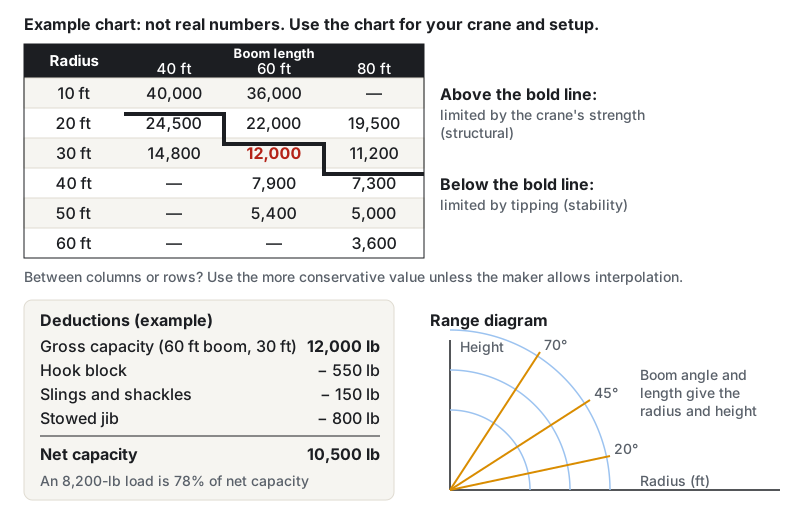
Start with the right chart
Cranes have many charts. Pick the one that matches the crane’s actual setup:
- Outriggers fully extended, mid-extended or retracted (or on rubber)
- Counterweight installed
- Working area: over the rear, over the side or 360 degrees
- Main boom, jib or boom extension, and their offset angle
- Parts of line reeved on the hook block
The crane’s load moment indicator (LMI) must be set to the same configuration. See Crane Safety Devices.
Find the capacity
- Radius: the horizontal distance from the center of rotation to the center of the load. Use the largest radius the load will reach during the whole lift, including when the boom deflects under load.
- Boom length: the actual length you’ll use.
- Read across and down to the gross capacity. If your radius or boom length falls between columns, use the more conservative value (the next longer radius or boom length), unless the maker allows interpolation.
Subtract deductions
The number on the chart is gross capacity. The net capacity for your load is gross capacity minus everything the crane holds besides the load:
- Hook block or overhaul ball
- Slings, shackles, spreader bars and below-the-hook devices
- Stowed or erected jibs and extensions, as the chart notes require
- Hoist line weight on some long-boom lifts
Structural vs. stability limits
On many charts, a bold line or shading separates ratings limited by structural strength (the boom or other parts could fail) from those limited by stability (the crane could tip). Both are deadly. Neither gives a warning you can rely on.
Read the notes. The fine print on a load chart sets conditions like level within a certain percentage, maximum wind, and when the ratings don’t apply. A capacity is valid only when every note is met.
Example
| Gross chart capacity at this radius and boom length | 12,000 lb |
|---|---|
| Minus hook block | − 550 lb |
| Minus slings and shackles | − 150 lb |
| Minus stowed jib deduction | − 800 lb |
| Net capacity | 10,500 lb |
| Load | 8,200 lb (78% of net capacity) |
Many companies treat lifts above a set percentage of capacity (often 75% to 90%) as critical lifts with a written plan. See Lift Planning & Critical Lifts.
Standards & references
- 29 CFR 1926.1417: Operation, including following load charts
- 29 CFR 1926.1427: Operator qualification and certification
- See also: Crane Safety Basics · Crane Setup
Last updated: