Intersections & Roundabouts
A large share of crashes happen at intersections, where traffic crosses paths. Left turns, red-light runners and drivers who don’t look cause many of them. Roundabouts reduce serious crashes, but only if drivers know how to use them.
- All drivers
Intersections
- Look left, right, then left again before entering, even on a green light. Red-light runners are common.
- Pause a second after the light turns green before going.
- Left turns: keep wheels straight while waiting, so a rear-end hit won’t push you into oncoming traffic. Only turn when you have a clear gap. Watch for pedestrians in the crosswalk you’re turning into.
- Yellow light: stop if you can do so safely. Don’t speed up to beat it.
- Right on red: come to a full stop and look for pedestrians and cyclists before turning, where allowed.
- Watch for big trucks making wide turns. See Sharing the Road with Trucks.
Roundabouts
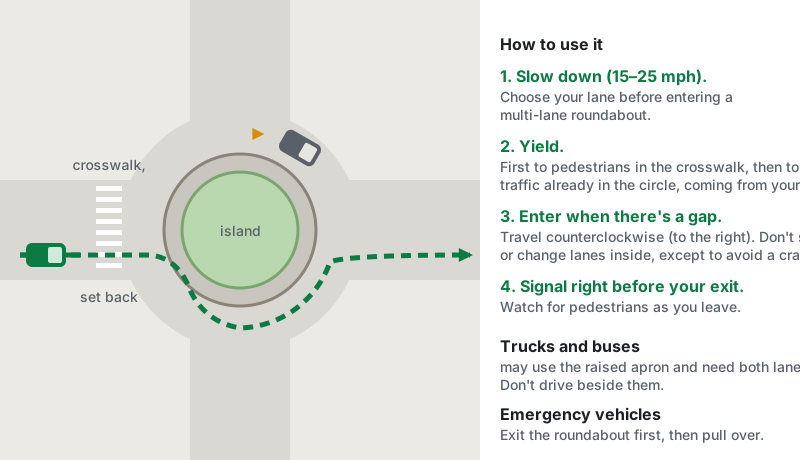
- Slow down as you approach (usually 15 to 25 mph).
- Choose your lane before entering a multi-lane roundabout, using the signs and lane arrows.
- Yield to pedestrians in the crosswalk, then yield to traffic already in the roundabout, coming from your left.
- Enter when there’s a gap and travel counterclockwise (to the right).
- Don’t stop inside the roundabout except to avoid a crash, and don’t change lanes inside.
- Signal right before your exit, and watch for pedestrians as you leave.
Large vehicles: trucks and buses may use the raised apron in the center and need both lanes. Don’t drive beside them in a roundabout. Emergency vehicles: exit the roundabout first, then pull over.
Why roundabouts are safer
Roundabouts slow traffic and remove the high-speed, right-angle and head-on crashes common at signals and stop signs. Studies by the Federal Highway Administration found large drops in deadly and injury crashes when intersections were converted to roundabouts.
Standards & references
Last updated: