Speeding & Following Distance
Speeding is a factor in close to a third of U.S. traffic deaths. Higher speed gives you less time to react, more distance to stop, and much more crash energy. Tailgating takes away the time you need to react at all.
- All drivers
- Work vehicles
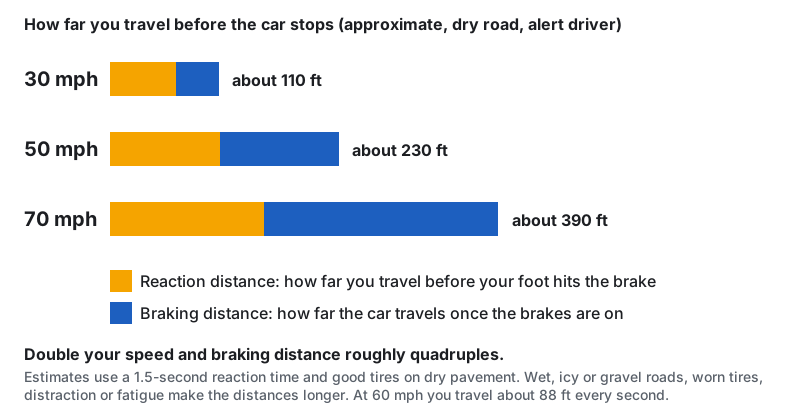
Why speed matters so much
- Reaction distance grows in step with speed: at 60 mph you travel about 88 feet every second.
- Braking distance grows much faster. Double your speed and braking distance roughly quadruples.
- Crash energy also rises with the square of speed, so injuries get much worse.
- Pedestrians hit at higher speeds are far more likely to die than those hit at 20 mph.
“Too fast” isn’t just over the limit
Many speed-related crashes happen at or below the posted limit, when drivers go too fast for:
- Rain, snow, ice and fog. See Winter Driving and Rain & Fog
- Curves, hills and gravel
- Darkness, when you can’t see as far. See Night Driving
- Work zones and school zones
- Heavy traffic and pedestrians
Following distance
- Keep at least 3 to 4 seconds behind the vehicle ahead in good conditions.
- Double it in rain, and leave even more on snow and ice.
- Leave more behind motorcycles and big trucks.
- To measure: when the vehicle ahead passes a fixed point, count “one-thousand-one, one-thousand-two, one-thousand-three.” If you pass it before you finish, back off.
The time you save is small
On a 20-mile trip, driving 70 instead of 60 saves less than 3 minutes, and traffic lights and congestion often erase even that. Leaving 5 minutes earlier is safer than driving faster.
Habits that help
- Use cruise control on open highways (not in rain or snow).
- Watch for speed limit changes, especially entering towns and work zones.
- Don’t try to keep up with fast traffic; keep right.
- Employers: don’t schedule routes that require speeding. Telematics can coach drivers.
Standards & references
- NHTSA: Speeding
- See also: Defensive Driving
Last updated: