Swing Falls
If you’re tied off but working off to the side of your anchor, a fall doesn’t stop straight down. You swing like a pendulum back toward the line under the anchor, and you can slam into a wall, a column or the edge of the building, or swing low enough to hit the ground.
- Construction
- General Industry
- Roofers
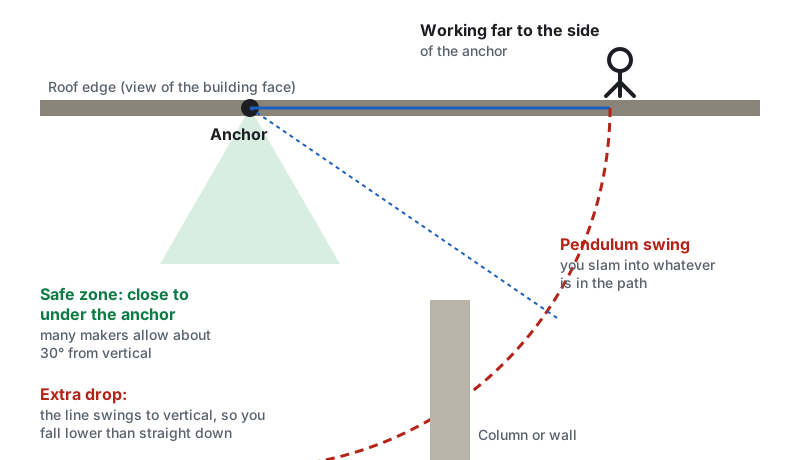
Why swing falls are dangerous
- You hit things. The swing can be as fast as a fall of the same height, and you can strike structures, equipment or other workers.
- You fall farther. When the line swings from an angle back to vertical, you end up lower than where the system first caught you. That eats into your fall clearance.
- Edges cut lines. As the line drags across a roof edge or beam while you swing, it can be cut or damaged, especially with self-retracting lifelines not rated for edges.
How much extra distance?
The farther you work to the side, the bigger the swing and the extra drop. Working 10 feet to the side of an anchor can add several feet to your fall. Every manufacturer publishes swing-fall charts for its equipment; use them along with your fall clearance calculation. See Calculating Fall Clearance.
How to prevent swing falls
- Keep the anchor overhead. Work as close to directly under or in front of your anchor as you can. Many makers limit the working angle to about 30 degrees from vertical.
- Move the anchor with the work. Re-anchor as you move along a roof or beam, instead of stretching sideways.
- Use a horizontal lifeline or trolley so your connection point travels with you. See Horizontal Lifelines.
- Use more than one anchor on long edges, spaced so you stay within the safe working zone.
- Use restraint instead of arrest where possible, so you can’t reach the edge at all. See Fall Restraint.
- Use guardrails on long edges. A guardrail has no swing hazard.
- Use edge-rated equipment (leading-edge SRLs and lanyards) when your line could run over an edge.
Corners are the worst spot. Working around an outside corner of a roof with the anchor back on one side sets up a long swing across the face of the building. Add an anchor near the corner or use a guardrail.
Before you tie off, ask
- Is the anchor as close to overhead as possible?
- How far to the side will I be working?
- What would I hit if I swung: walls, columns, equipment, people?
- Does my clearance still work with the extra swing distance?
- Will my line run over an edge? Is the equipment rated for it?
- Is there a rescue plan if I end up hanging off to the side?
Standards & references
- 29 CFR 1926.502(d): Personal fall arrest systems (no contact with any lower level)
- OSHA: Fall protection
- See also: Anchorage Points · Self-Retracting Lifelines · Fall Rescue
Last updated: