Static Electricity, Bonding & Grounding
Pouring, pumping or spraying flammable liquids can build up static electricity. A tiny static spark, too small to feel, is enough to ignite gasoline or solvent vapors.
- General Industry
- Construction
How static builds up
- Liquid flowing through hoses, pipes and filters, especially fast flow
- Free-falling or splashing liquid when pouring from a height
- Spraying, mixing and agitating
- People walking on insulating floors, or sliding across vehicle seats
- Plastic containers, liners and bags, which hold charge and can’t be grounded
- Moving powders and dusts through ducts and chutes
Bonding vs. grounding
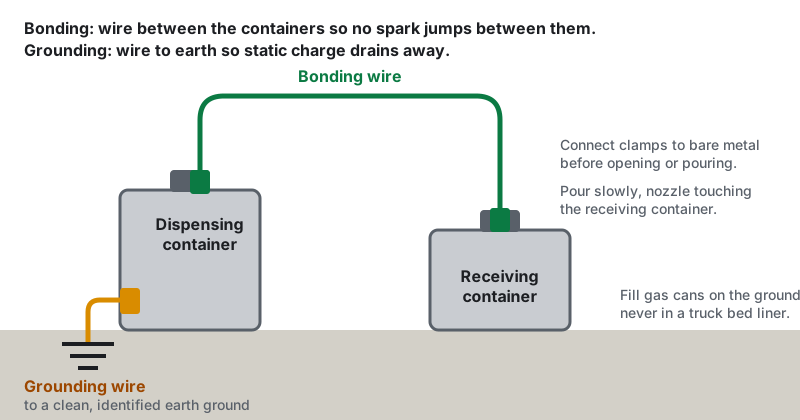
- Bonding: connecting two containers with a wire so they’re at the same electrical charge, so no spark jumps between them.
- Grounding: connecting a container to the earth so static charge drains away.
When transferring Class I flammable liquids (like gasoline) between metal containers, both are usually needed: bond the containers to each other, and ground the dispensing container.
Safe transfer
- Connect bonding and grounding clamps to bare metal before opening containers or starting to pour, and remove them only after you finish and close containers.
- Use clamps with sharp teeth or points that bite through paint and rust.
- Pour slowly, and keep the nozzle in contact with the receiving container.
- Use fill pipes that reach near the bottom of tanks, to reduce splashing.
- Use approved safety cans and pumps, not open buckets. See Flammable Liquids.
- Ventilate the area and remove ignition sources.
Gas cans and fueling
- Fill portable gas cans on the ground, never in a vehicle or truck bed liner. The plastic liner insulates the can from the ground.
- Keep the nozzle in contact with the can while filling.
- Don’t re-enter your vehicle while fueling; if you must, touch metal away from the nozzle to discharge static first.
- Don’t fill containers that aren’t approved for fuel.
Plastic containers can’t be grounded the same way metal ones can. Follow the container maker’s instructions, and use metal, bonded systems for larger transfers. Never use plastic buckets for flammable solvents.
Dust
Static can also ignite combustible dust clouds in dust collectors, silos and pneumatic conveying systems. Those systems need grounded ductwork and bonding across flexible connections. See Combustible Dust.
Inspect before each use
- Bonding and grounding wires not frayed, cut or corroded
- Clamps strong and teeth sharp
- Ground connection point clean and identified
- Containers approved and in good condition
Standards & references
- 29 CFR 1910.106: Flammable liquids (sources of ignition, bonding and grounding)
- 29 CFR 1926.152: Flammable liquids (construction)
- NFPA 77: Recommended practice on static electricity
Last updated: