Job-Made Wooden Ladders
On many construction sites, carpenters build wooden ladders for access into excavations, onto decks and between floors. A well-built job-made ladder is strong and steady. A sloppy one, with uneven cleats, bad lumber or too few nails, is a fall waiting to happen.
- Construction
- Carpenters
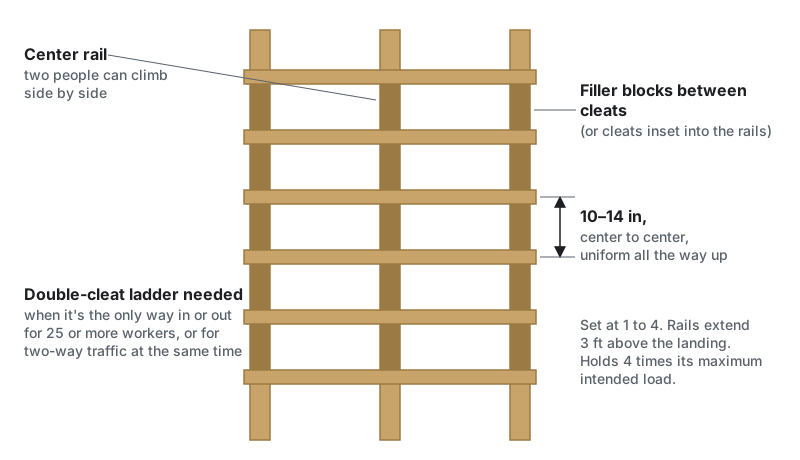
Single-cleat vs. double-cleat
| Type | Design | Use |
|---|---|---|
| Single-cleat | Two side rails with cleats across them | Lighter traffic, one person at a time |
| Double-cleat | Three rails (a center rail), so two people can climb side by side | Required when the ladder is the only way in or out for 25 or more workers, or when there’s two-way traffic at the same time |
Building it right
- Cleat spacing: 10 to 14 inches apart, measured center to center, and uniform all the way up. Uneven steps trip climbers.
- Lumber: straight-grained, sound lumber without large knots, splits, shakes or rot. Follow a design (such as the ANSI A14.4 standard for job-made ladders) for rail and cleat sizes.
- Fastening: inset cleats into the rails, or install filler blocks between cleats, and nail as the design requires. Cleats nailed only to the face of the rails can pull off.
- Strength: the ladder must hold at least 4 times its maximum intended load.
- Finish: wood ladders can’t be painted or coated with anything opaque that could hide cracks or defects. Clear sealer is OK, and labels can go on one face of a side rail.
- Surfaces: cleats should have a slip-resistant surface or be kept clean of mud, ice and oil.
Setting it up
- Set it at about a 1-to-4 angle: the base 1 foot out for every 4 feet of height.
- Rails extend at least 3 feet above the landing, or provide a grab rail.
- Secure it at the top and bottom so it can’t slip or shift.
- Keep the area at the top and bottom clear.
- In trenches 4 feet or deeper, a ladder or other way out must be within 25 feet of every worker. See Excavation Access & Egress.
Inspect it
- No cracked, split or broken rails or cleats
- No loose, missing or protruding nails
- Cleats evenly spaced and solidly fastened
- No rot, mud, ice or grease on cleats
- Base and top secured; rails extend 3 feet above the landing
A competent person must inspect ladders regularly and after anything that could damage them. Damaged ladders must be tagged “Do Not Use” and taken out of service until repaired or destroyed.
Not a substitute for stairs. When a building has stairways under construction, OSHA has rules about when stairs or ladders must be provided between levels. Large crews may be better served by temporary stairs or a stair tower. See Stairways.
Standards & references
- 29 CFR 1926.1053: Ladders, including job-made ladders
- 29 CFR 1926.1051: When stairways or ladders are required
- See also: Ladder Basics · Extension Ladders · Carpentry & Framing
Last updated: