The Focus Four Hazards
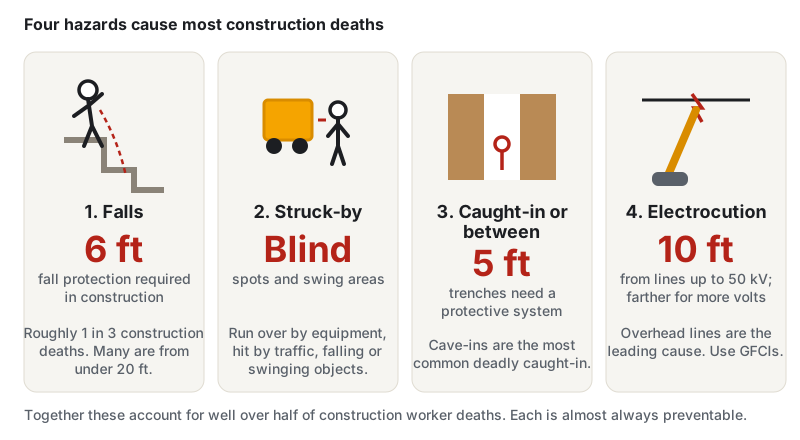
Four types of incidents cause most construction worker deaths: falls, struck-by, caught-in or between, and electrocution. OSHA calls them the “Focus Four” (you may also hear the “Fatal Four”). Every OSHA 10 and OSHA 30 construction course covers them, and OSHA inspectors look for them on every site. Learn to recognize them and you’ll avoid the hazards most likely to kill you.
- Construction
- General Industry
Why these four?
Year after year, government injury data shows the same pattern: falls cause the most construction deaths, followed by being struck by objects and equipment, electrocutions, and being caught in or between objects. Together they account for well over half of construction worker deaths. The same hazards also injure and kill workers in plants, warehouses, utilities and maintenance.
Each of the four can kill in seconds, and each is almost always preventable with controls that are well known and required by OSHA rules.
1. Falls
Falls are the leading cause of death in construction, responsible for roughly one in three construction fatalities. Many deadly falls are from less than 20 feet.
Where falls happen
- Unprotected roof edges, skylights and roof openings
- Ladders that slide, tip, are overreached or are the wrong type
- Scaffolds without guardrails, planking or proper access
- Floor holes, stairwells, elevator shafts and leading edges
- Steel, equipment, trucks and trailers
Key numbers
| Rule | Number |
|---|---|
| Fall protection required in construction | 6 feet or more above a lower level |
| Fall protection required in general industry | 4 feet or more |
| Scaffold fall protection | 10 feet or more |
| Guardrail top rail height | 42 inches, plus or minus 3 inches |
| Fall arrest anchor strength | 5,000 pounds per worker (or designed by a qualified person) |
| Extension ladder angle | 1 foot out for every 4 feet up (4:1) |
| Ladder extension above landing | 3 feet |
| Hole covers | Support twice the expected load, secured and marked “HOLE” or “COVER” |
How to prevent them
- Plan fall protection before the job starts. Use guardrails and covers first, then personal fall arrest.
- Inspect harnesses, lanyards and anchors before each use.
- Use the right ladder, keep three points of contact, and never stand on the top cap.
- Only use scaffolds that a competent person has inspected and tagged.
Start with Fall Protection Basics, then Ladder Safety and Scaffold Safety.
2. Struck-by
Being hit by vehicles and equipment, falling or flying objects, swinging loads or collapsing material. Highway work zones and backing vehicles are especially deadly.
Common struck-by incidents
- Run over or backed over by a dump truck, loader or other equipment
- Hit by passing traffic in a work zone
- Hit by tools or material falling from above
- Hit by nails, grinder fragments or other flying objects
- Hit by a swinging crane load or excavator counterweight
How to prevent them
- Wear high-visibility clothing near traffic and equipment.
- Stay out of blind spots and swing radius areas, and make eye contact with operators.
- Use spotters and backup alarms for backing vehicles.
- Never work or walk under a suspended load.
- Tether tools at height, use toeboards, and barricade drop zones.
- Wear your hard hat and eye protection.
See Struck-By & Caught-Between Hazards and Highway Work Zones.
3. Caught-in or caught-between
Being crushed, squeezed, pinched or compressed. Trench collapses are the most common deadly caught-in incident in construction.
Common caught-in or between incidents
- Buried in a trench or excavation cave-in
- Pinned between equipment and a wall, truck or another machine
- Crushed by equipment that rolls over
- Pulled into rotating parts, conveyors or unguarded machinery
- Crushed under raised equipment that wasn’t blocked
Key numbers
- Trenches 5 feet or deeper need a protective system (sloping, shoring or a trench box) unless they’re in stable rock.
- Trenches 20 feet or deeper need a protective system designed by a registered professional engineer.
- Spoil piles and equipment must be at least 2 feet back from the edge.
- A ladder or other way out within 25 feet of every worker in trenches 4 feet or deeper.
How to prevent them
- Never enter an unprotected trench, even for a minute.
- Keep machine guards in place and lock out equipment before servicing it.
- Block raised equipment and wear seatbelts in equipment with rollover protection.
- Never stand between moving equipment and something solid.
See Trenching Basics and Lockout/Tagout.
4. Electrocution
Contact with overhead power lines is the most common cause of electrocution in construction. Other causes include contact with energized parts, damaged cords and tools, and improper grounding.
Common electrocution incidents
- A crane boom, dump truck bed, ladder, scaffold or long tool touches an overhead power line
- Working on circuits that weren’t locked out and tested
- Damaged extension cords or tools, especially in wet conditions
- Missing ground pins and no GFCI protection
- Digging into buried electrical lines
Key numbers
- Stay at least 10 feet from overhead lines up to 50,000 volts, and farther for higher voltages. Treat every line as energized.
- GFCIs trip at about 5 milliamps of leakage current, enough to prevent most electrocutions.
How to prevent them
- Look up and locate power lines before raising anything. Use a spotter for equipment near lines.
- Use GFCIs on all temporary power, and test them before use.
- Inspect cords and tools before each use, and remove damaged ones from service.
- Lock out and test before working on electrical equipment. Only qualified workers work on electrical systems.
- Call 811 before you dig.
See Electrical Safety Basics, Overhead Power Lines and GFCI Protection.
Remember: Each of these can kill in seconds, and each is preventable. If you see one of them, you have the right to stop the work and get it fixed. See Stop-Work Authority.
Daily Focus Four check
Use this at the start of every shift or task:
- Falls: Am I working near an edge, hole or opening 6 feet or more up? Is fall protection in place and inspected?
- Struck-by: Where are the vehicles, equipment and overhead work? Am I visible, and out of blind spots and drop zones?
- Caught-in/between: Is there a trench, rotating part, pinch point or raised equipment? Is it protected, guarded, locked out or blocked?
- Electrocution: Where are the power lines, overhead and underground? Are cords, tools and GFCIs in good shape?
Beyond construction
The Focus Four come from construction data, but the same hazards hurt workers everywhere. In general industry, falls from as low as 4 feet, forklifts, machine guarding and electrical hazards are among OSHA’s most-cited problems every year.
Standards & references
- OSHA: Construction Focus Four training
- OSHA: Commonly used statistics
- 29 CFR 1926.501: Duty to have fall protection
- 29 CFR 1926.652: Excavation protective systems
- 29 CFR 1926.416: Electrical safety requirements (construction)
Related: Your First Day on the Jobsite · OSHA 10 & 30 Cards · OSHA Emphasis Programs
Last updated: